Playing the piano is a rewarding and fulfilling musical journey that requires dedication and consistent practice. The piano is a versatile instrument that allows you to express a wide range of emotions and styles. Just like any other musical instrument, the piano demands respect and care Factors such as proper posture, hand position, and regular practice routines can significantly impact your progress during lessons.
Yourself: Come well-rested, focused, and ready to learn.
Piano or Keyboard: You will need access to a full-size piano or keyboard. (Preferably a piano)
Lesson and Warm-Up Books: We use the Bastian Piano and Technique Books and Hanon.
Binder: A binder to organize and store sheet music.
Pencil & Notebook: For marking musical notations, corrections, and writing down music theory concepts, practice instructions, and personal notes.
Metronome: Use a metronome to develop rhythm and timing skills.
1. Technique
2. Music Theory
3. Artistry
1. Warm-ups - Focuses on Element 1 (Technique & Music Theory)
2. Lesson - Focuses on Element 2 (Technique)
3. Performance - Incorporates Elements 1 to 3 (Technique, Music Theory, Artistry)
1. Varying Styles - Explore different genres and techniques.
2. Level of Difficulty - Choose pieces that challenge you but are within your current skill level and capabilities.
3. Personal Interest - Select pieces that resonate with you and ignite your passion for playing.
4. Diverse Composers - Explore music from various composers to broaden your musical understanding.
Your voice is a unique instrument that requires the same level of respect and care as any other musical instrument, even though you can't physically see, touch, or feel it. Your voice is affected by the choices you make and how you treat your body. Factors such as lack of sleep, strain from excessive or incorrect use, mood, and attitude can all impact your voice during lessons.
Yourself: Be well-rested, open-minded, and ready to engage.
Sight Reading Book:Concone - School of Sight-Singing: VocalBinder: This is where you will store your music, worksheets, and notes.
Pencil, Notebook, and Staff Paper: For marking and corrections and writing theory concepts, practice instructions, and personal notes.
Sheet Music: It is important to have both lyrics and sheet music to learn from.
1. Ear training
2. Sight-singing
3. Musicality
1. Warm-ups - Focuses on Element 1 (Ear training)
2. Lesson - Focuses on Element 2 (Sight-singing)
3. Performance - Incorporates Elements 1 to 3 (Ear training, Sight-singing, Musicality)
1. Varying Styles - Explore different genres and vocal techniques.
2. Age Appropriate - Choose songs that suit your vocal maturity and lyrical content.
3. Appropriate Level of Difficulty - Select songs that challenge you but are within your vocal range and capabilities.
4. Correct Voice Type - Ensure the songs are suited to your voice type and strengths.
Please use a laptop with a functioning built-in microphone and camera for our online lessons.
Make sure you have the Zoom application installed on your laptop. If you don't have it, you can download it for free from the Zoom website.
You will also need to be able to access a Google Drive folder. This will be our shared space for exchanging music sheets, recordings, and any other materials related to your lessons. If you don't have a Google account, please create one before our lesson.


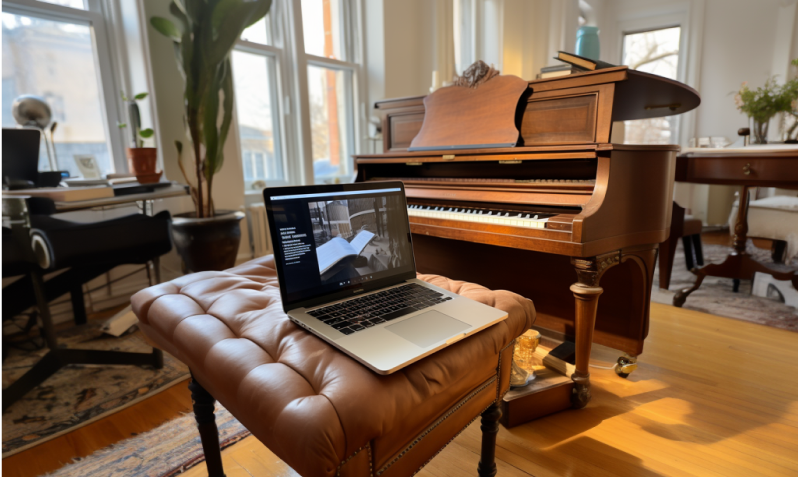
Position your laptop next to the keyboard/piano, ensuring clear visibility of both the keys and the screen. Adjust the laptop's position as needed.
Utilize a Table or Stool: Place a stable table or stool next to the keyboard/piano, ideally at the same height as the keyboard. This will provide a comfortable surface for your laptop.
To improve audio quality, click on the "Original Sound for Musicians" option in the top left corner of the Zoom window.